
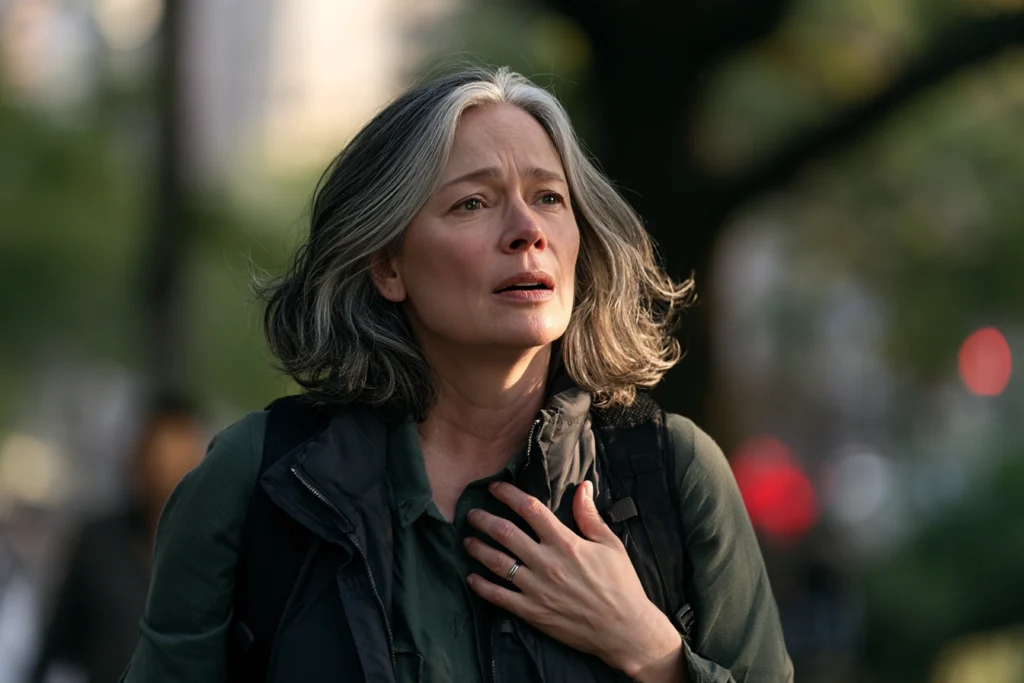
Heart attacks do not always happen the dramatic way we see them in movies. There may be no sudden collapse, crushing chest pain, or obvious warning that something serious is happening. In women, the signs can sometimes be surprisingly subtle, with symptoms such as unusual fatigue, nausea, shortness of breath, or discomfort in the back or jaw that may easily be mistaken for stress, indigestion, exhaustion, or normal changes associated with getting older. This is why understanding the symptoms of heart attack in women over 40 is so important. As a physician, one thing I want women to understand is that a symptom does not have to be unbearable to deserve attention. Learning what feels normal for your body and recognizing a sudden, unexplained, or unusual change can help you know when it is time to seek medical care.
Important: A suspected heart attack is a medical emergency. If you develop new chest pressure or pain, severe or unexplained shortness of breath, cold sweating, faintness, or discomfort spreading to your arm, back, neck, or jaw, seek emergency medical care immediately.
What Happens During a Heart Attack?
A heart attack, medically known as a myocardial infarction, occurs when blood flow to part of the heart muscle becomes severely reduced or completely blocked. The heart needs a continuous supply of oxygen-rich blood, and when that supply is interrupted, heart muscle can become damaged. Many heart attacks are related to coronary artery disease, in which fatty deposits called plaques accumulate inside the coronary arteries. If a plaque ruptures, a blood clot can form and interfere with blood flow to the heart. This is why recognizing the symptoms of heart attack in women over 40 and seeking emergency treatment promptly is so important, because the longer the heart muscle goes without adequate oxygen, the greater the potential damage.
Are Heart Attack Symptoms Different in Women?
There is a common misconception that women do not experience chest pain during a heart attack, but chest pain or discomfort remains the most common heart attack symptom in women. The difference is that women may also experience symptoms that do not immediately make them think about their heart, including unusual fatigue, nausea, shortness of breath, dizziness, upset stomach, or discomfort in the back, shoulder, neck, or jaw. Some women may even experience a heart attack without obvious chest pain. Most episodes of fatigue, nausea, or back pain are not caused by heart attacks, but symptoms that are new, unexplained, unusually intense, persistent, or occur together should not automatically be dismissed as stress, poor sleep, indigestion, or aging.
1. Chest Pressure, Tightness, or Discomfort
Among the most important symptoms of heart attack in women over 40 is chest discomfort, but it does not always feel like the intense or crushing pain many people expect. Some women describe the sensation as pressure, tightness, squeezing, heaviness, fullness, burning, or aching in the center or left side of the chest. The discomfort may last for several minutes or disappear and then return. Because a heart attack can begin with relatively mild symptoms, women should not wait for the pain to become unbearable before seeking help. New or unexplained chest pressure becomes especially concerning when it occurs together with shortness of breath, nausea, cold sweating, dizziness, unusual weakness, or discomfort elsewhere in the upper body.

2. Unusual or Extreme Fatigue
Unusual fatigue can be particularly easy for women over 40 to overlook because tiredness is often blamed on work, family responsibilities, stress, poor sleep, or hormonal changes. However, heart-related fatigue may feel noticeably different from your usual tiredness. You might suddenly struggle with everyday activities that normally feel easy, such as climbing stairs, walking to your car, carrying groceries, showering, or completing household tasks. Fatigue alone is extremely common and usually does not indicate a heart attack, but sudden or unexplained exhaustion deserves more attention when it appears alongside chest discomfort, shortness of breath, nausea, sweating, dizziness, or other unusual symptoms.
3. Shortness of Breath
Shortness of breath is another important warning sign because it can occur with or without chest discomfort during a heart attack. A woman may suddenly feel as though she cannot get enough air while walking a familiar distance, performing normal household activities, or even while resting. Although breathlessness can have many causes, sudden or unexplained difficulty breathing should not automatically be attributed to being out of shape, stressed, or tired. When it occurs together with chest pressure, nausea, cold sweating, dizziness, unusual weakness, or upper-body discomfort, emergency medical evaluation is important.
4. Back, Shoulder, Neck, or Jaw Pain
Heart attack discomfort is not always limited to the chest or left arm. Women may experience pain, pressure, aching, or an unusual sensation in the upper back, shoulders, neck, jaw, one or both arms, or upper abdomen. This can make the symptom difficult to recognize because back, shoulder, and neck pain are extremely common, particularly after age 40. The key is to pay attention to discomfort that is new, unexplained, sudden, or different from your usual muscular pain, especially when it appears together with chest pressure, shortness of breath, nausea, cold sweating, dizziness, or unusual weakness.
5. Nausea, Vomiting, or Indigestion
Nausea, vomiting, upper abdominal discomfort, an upset stomach, or an indigestion-like sensation can sometimes occur during a heart attack, which is why some women initially assume their symptoms are related to something they ate. Most digestive symptoms are not caused by heart disease, but the overall pattern matters. Sudden nausea or indigestion becomes more concerning when it occurs with chest discomfort, shortness of breath, cold sweating, dizziness, unusual weakness, jaw discomfort, or upper-back pain. Because digestive and cardiac symptoms can sometimes overlap, new or unusual symptoms should not be dismissed simply because they resemble indigestion.
6. Cold Sweating
Suddenly developing a cold sweat or feeling unusually clammy without an obvious reason can also be a warning sign of a heart attack. For women over 40, this symptom can be particularly confusing because unexpected sweating may be attributed to perimenopause or hot flashes. While hormonal changes are a common explanation, sweating accompanied by chest pressure, shortness of breath, nausea, weakness, dizziness, or upper-body discomfort should not simply be blamed on hormones. When considering the symptoms of heart attack in women over 40, it is often the combination of several unusual symptoms rather than one isolated sign that should raise concern.
7. Dizziness or Lightheadedness
Dizziness and lightheadedness have many possible causes, including dehydration, hunger, exhaustion, or standing up too quickly, but they can also occur during a heart attack. Sudden dizziness becomes more concerning when there is no obvious explanation or when it appears together with chest discomfort, shortness of breath, cold sweating, nausea, unusual weakness, or pain elsewhere in the upper body. A sudden sensation that you might faint, particularly when combined with other possible cardiac symptoms, should not be ignored.
8. Anxiety or a Feeling That Something Is Wrong
Anxiety can be particularly difficult to interpret because panic attacks and heart attacks may share symptoms such as chest tightness, shortness of breath, sweating, dizziness, nausea, and a racing heartbeat. At the same time, feelings of anxiety can accompany a heart attack, making it difficult to distinguish the two based on symptoms alone. Significant new physical symptoms should therefore not automatically be labeled as “just anxiety,” especially if they feel different from your usual anxiety, occur during physical exertion, are unusually intense or persistent, or appear together with other heart attack warning signs.
9. Rapid or Irregular Heartbeat
Some women experiencing a heart attack may notice that their heart feels as though it is racing, pounding, fluttering, or beating irregularly. Palpitations are common and are often caused by less serious factors such as stress, caffeine, dehydration, medications, or thyroid problems, so having palpitations does not necessarily mean you are having a heart attack. However, a new or unusual rapid or irregular heartbeat becomes more concerning when it occurs together with chest discomfort, shortness of breath, dizziness, faintness, cold sweating, nausea, or other unexplained symptoms.
Supporting your health after 40 goes beyond heart care—discover our guide to choosing the best multivitamin for women over 40 for your changing nutritional needs.
Can a Woman Have a Heart Attack Without Chest Pain?
Yes, a woman can experience a heart attack without obvious chest pain, although chest discomfort remains the most common symptom. Instead of classic chest pain, some women may experience unusual fatigue, shortness of breath, nausea, dizziness, stomach discomfort, or pain in the back or shoulder. This is one of the most important things to understand about the symptoms of heart attack in women over 40, because the absence of severe chest pain does not necessarily mean the heart is fine. A new and unexplained combination of symptoms deserves attention, particularly when cardiovascular risk factors are present.
Looking for another heart-friendly addition to a balanced lifestyle? Explore the potential benefits of matcha and what research says about this antioxidant-rich drink.
Heart Attack or Indigestion: How Can You Tell?
Distinguishing a heart attack from indigestion can be surprisingly difficult because the symptoms may overlap. Heartburn commonly produces a burning sensation behind the breastbone and may be associated with eating or lying down, while heart attack discomfort may feel more like pressure, squeezing, tightness, fullness, or heaviness and may occur with shortness of breath, cold sweating, nausea, dizziness, or discomfort spreading to the arm, back, neck, or jaw. However, these differences are not reliable enough to diagnose yourself at home. When chest discomfort is new, unusual, persistent, severe, or associated with other warning signs, urgent medical evaluation is the safer choice.
Stress and quality sleep also matter for overall well-being. Discover the calming benefits of chamomile tea and how it may fit into a healthy evening routine.
Why Women Over 40 Should Pay More Attention to Their Heart
Turning 40 does not suddenly mean that a woman is likely to experience a heart attack, but the 40s are an excellent time to become more proactive about cardiovascular health. Heart attack risk is influenced by several factors, including high blood pressure, high cholesterol, diabetes, smoking, obesity, physical inactivity, increasing age, family history, and certain medical conditions. Hormonal and metabolic changes around perimenopause and menopause may also influence cardiovascular health over time. Rather than becoming frightened by the symptoms of heart attack in women over 40, use this stage of life as an opportunity to understand your personal risk by knowing your blood pressure, cholesterol, and blood sugar levels and discussing cardiovascular prevention with your healthcare professional when appropriate.
When Should You Seek Emergency Help?
You should seek emergency medical care immediately if you believe you may be experiencing a heart attack, particularly if you develop new chest pressure, squeezing, heaviness or pain, sudden unexplained shortness of breath, cold sweating, severe dizziness or faintness, nausea associated with chest or upper-body discomfort, or pain spreading to the arm, shoulder, back, neck, or jaw. Heart attack symptoms can be mild or severe, constant or intermittent, and they do not need to look dramatic to represent an emergency. If several suspicious symptoms occur together or you are uncertain whether your symptoms are serious, seeking urgent medical assessment is safer than staying home and waiting for them to worsen.
How Can Women Reduce Their Heart Attack Risk After 40?
Recognizing the symptoms of heart attack in women over 40 is important, but reducing cardiovascular risk is equally valuable. A heart-healthy lifestyle includes staying physically active, avoiding smoking, following a balanced eating pattern, getting adequate sleep, and working toward maintaining a healthy weight. Regular health checks are also important because high blood pressure, elevated cholesterol, and abnormal blood glucose can develop without obvious symptoms. Women with hypertension, diabetes, high cholesterol, smoking history, obesity, or a strong family history of premature cardiovascular disease should pay particular attention to their individual risk and discuss appropriate prevention strategies with a healthcare professional.
Frequently Asked Questions
What Are the First Signs of a Mild Heart Attack in a Woman?
A mild heart attack may begin with subtle symptoms such as chest pressure or tightness, unusual fatigue, shortness of breath, nausea, dizziness, cold sweating, or discomfort in the back, shoulder, arm, neck, or jaw. Symptoms may start gradually, feel relatively mild, or disappear and return, so the intensity of a symptom should not be used to determine whether a heart attack is serious. New or unexplained symptoms, particularly when several occur together, deserve urgent medical attention.
Can a 40-Year-Old Female Have a Heart Attack?
Yes, a 40-year-old woman can have a heart attack. Although cardiovascular risk generally increases with age, heart attacks can occur in younger women, particularly when risk factors such as smoking, high blood pressure, high cholesterol, diabetes, obesity, physical inactivity, a strong family history of premature cardiovascular disease, or certain medical conditions are present. Being 40 should therefore not be used as a reason to dismiss new or concerning heart-related symptoms.
Is It a Heart Attack or Anxiety?
Heart attacks and anxiety can sometimes feel surprisingly similar because both may cause chest discomfort, shortness of breath, sweating, nausea, dizziness, palpitations, and a feeling that something is wrong. It is not always possible to safely distinguish the two based on symptoms alone, particularly when the symptoms are new or different from previous anxiety episodes. New, severe, persistent, exertional, or otherwise concerning chest symptoms should not automatically be attributed to anxiety, and urgent medical assessment is appropriate when a heart attack is possible.
What Are the Warning Signs 7 Days Before a Heart Attack?
There is no reliable set of warning signs that can predict a heart attack exactly seven days in advance. Some people may experience symptoms such as recurring chest discomfort, unusual fatigue, shortness of breath, or reduced exercise tolerance in the hours, days, or sometimes longer before a heart attack, while others may have little or no advance warning. Because these symptoms can also have many other causes, they cannot be used to predict when a heart attack will happen. New, recurrent, or worsening chest discomfort or other concerning cardiovascular symptoms should be medically evaluated rather than waiting to see whether a heart attack occurs.
My Perspective as a Doctor
In my experience as a physician, one of the most valuable health habits a woman can develop is learning what feels normal for her body and recognizing when something changes. I do not want women to become frightened every time they feel tired, nauseated, dizzy, or develop back pain because these symptoms are extremely common and usually have causes unrelated to the heart. At the same time, I do not want a woman to dismiss a meaningful change simply because she is busy, stressed, relatively young, or convinced that a heart attack must cause unbearable chest pain. My advice is simple: know your normal, understand your cardiovascular risk factors, and pay attention when something suddenly feels different. When several unexplained warning signs appear together, seeking medical care promptly is safer than waiting for symptoms to become severe.
Final Thoughts
The symptoms of heart attack in women over 40 can range from classic chest pressure to much less obvious signs such as unusual fatigue, shortness of breath, nausea, cold sweating, dizziness, upper-back or shoulder discomfort, and jaw pain. The most important lesson is that a heart attack does not always look dramatic, and symptoms can sometimes be mild or easy to mistake for stress, indigestion, anxiety, or everyday exhaustion. Understanding your cardiovascular risk, knowing what feels normal for your body, and taking sudden or unexplained combinations of symptoms seriously can help you respond more quickly when medical evaluation is needed. When a heart attack is suspected, do not wait for symptoms to become severe—seek emergency medical care immediately.
Medical Disclaimer: This article is for educational and informational purposes only and is not intended to replace professional medical advice, diagnosis, or treatment. If you believe you or someone else may be experiencing a heart attack, seek emergency medical care immediately.
This article was carefully developed using trusted medical guidance from the American Heart Association and evidence reviewed by Medical News Today to provide accurate, reliable information about heart attack symptoms in women.