Hair loss, thinning hair, and slow hair growth are concerns that affect millions of people around the world. Many individuals look for natural solutions before turning to medications or invasive treatments. One of the most popular natural approaches is using the Best hair growth oil to nourish the scalp and support stronger hair follicles.
Hair oils have been used for centuries in many cultures to maintain scalp health and improve hair appearance. Modern dermatological research suggests that certain oils may support hair growth indirectly by improving scalp circulation, reducing inflammation, and protecting the hair shaft from damage. Although oils cannot completely reverse genetic hair loss, the Best hair growth oil can help improve the environment in which hair follicles grow.
In this guide, we will explore how hair oils work, which oils are considered the most effective, and how to use them properly for healthier hair.
Understanding Hair Growth
To understand how the Best hair growth oil may support hair health, it is important to know how hair grows.
Hair follicles follow a biological growth cycle consisting of three main phases.
Anagen Phase
This is the active growth stage. During this phase, hair grows continuously and may remain in this stage for two to seven years.
Catagen Phase
This short transitional stage lasts a few weeks. Hair growth slows while the follicle prepares for the resting stage.
Telogen Phase
This is the resting phase. Hair eventually sheds, allowing a new hair strand to begin growing from the follicle.
Hair thinning often occurs when the anagen phase becomes shorter or when follicles are weakened by stress, hormonal changes, inflammation, or nutritional deficiencies. The Best hair growth oil may help support scalp health and improve conditions around hair follicles.

How Hair Oils Support Healthy Hair
Hair oils cannot instantly stimulate hair growth like pharmaceutical treatments. However, the Best hair growth oil can support the scalp and hair structure through several beneficial mechanisms.
Natural oils may help by:
• nourishing the scalp with essential fatty acids
• improving blood circulation in the scalp
• reducing inflammation around hair follicles
• strengthening the hair shaft
• preventing dryness and breakage
A healthy scalp environment is essential for strong hair growth, and this is where the Best hair growth oil may play an important role.
Rosemary Oil: A Powerful Natural Hair Growth Oil
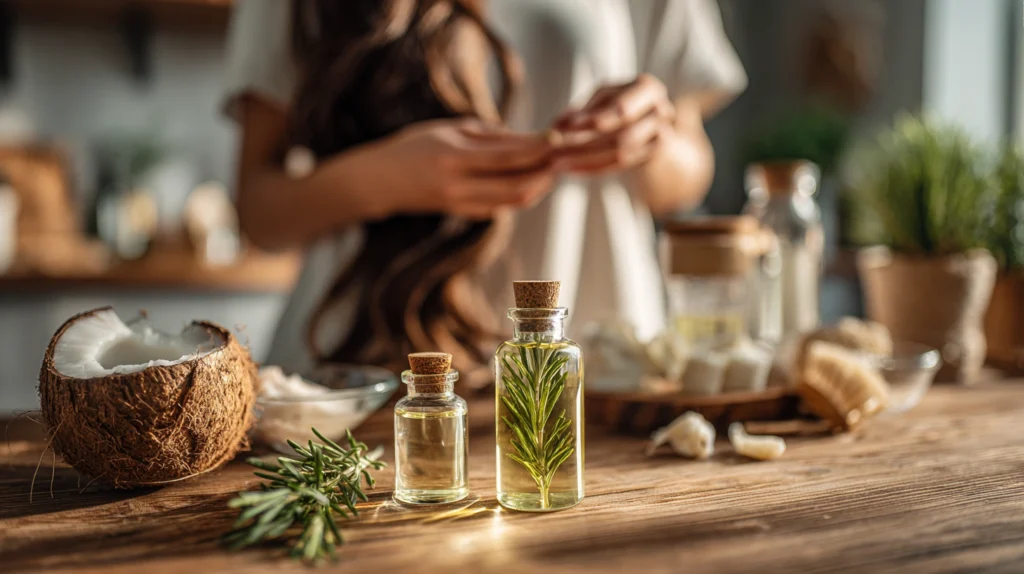
Among natural remedies, rosemary oil is frequently considered one of the most promising choices for the Best hair growth oil.
Rosemary essential oil contains antioxidants and compounds that may stimulate blood circulation in the scalp. Increased circulation improves the delivery of nutrients and oxygen to hair follicles, which may support hair growth.
Some research suggests rosemary oil may improve hair density when used regularly over several months. Many dermatologists believe rosemary oil may help hair growth by reducing inflammation around follicles and supporting tissue repair in the scalp.
Because of these benefits, rosemary oil is widely included in formulations described as the Best hair growth oil for natural hair care.

Castor Oil: Strengthening Hair Fibers
Castor oil has long been used in traditional hair treatments. It contains ricinoleic acid, omega-6 fatty acids, and vitamin E, which help moisturize and protect the scalp.
Although scientific evidence linking castor oil directly to hair growth is limited, it helps reduce hair breakage and dryness. When hair strands remain strong, they are less likely to break, allowing hair to grow longer over time.
For this reason, castor oil is often included in mixtures designed to create the Best hair growth oil routine.
Coconut Oil: Protecting the Hair Shaft
Coconut oil is one of the most widely studied oils for hair care. Its unique structure allows it to penetrate the hair shaft more effectively than many other oils.
The fatty acids in coconut oil help reduce protein loss in hair fibers, protecting them from damage during washing and styling. Stronger hair strands are less likely to break, which helps maintain hair length.
Because of its protective properties, coconut oil is commonly used as a base ingredient in the Best hair growth oil formulas.
Peppermint Oil: Stimulating the Scalp
Peppermint oil is another natural oil that may support scalp health. The menthol contained in peppermint oil produces a cooling sensation that many people associate with scalp stimulation.
This oil may help increase blood flow in the scalp, which can support follicle activity. Improved circulation may create better conditions for hair growth.
Peppermint oil is highly concentrated and should always be diluted with a carrier oil before use. When used correctly, it can complement a Best hair growth oil treatment routine.
Argan Oil: Protecting Hair From Environmental Damage
Argan oil is rich in vitamin E, antioxidants, and essential fatty acids. These nutrients help protect hair from oxidative stress caused by pollution, heat styling, and environmental exposure.
Although argan oil does not directly stimulate hair follicles, it strengthens hair fibers and improves elasticity. This helps reduce breakage and improves overall hair quality.
For individuals with dry or damaged hair, argan oil can be an important component of the Best hair growth oil care routine.
Jojoba Oil: Supporting a Healthy Scalp
Jojoba oil closely resembles the natural oils produced by the scalp. This makes it especially beneficial for balancing scalp conditions.
Jojoba oil may help regulate oil production, reduce dandruff, and improve scalp hydration. A healthy scalp environment supports the proper functioning of hair follicles.
Because of its gentle and balancing properties, jojoba oil is often included in mixtures considered the Best hair growth oil for regular scalp care.
Avocado Oil: Nutrient-Rich Support for Hair
Avocado oil contains several vitamins and fatty acids essential for hair health, including vitamins A, D, and E.
These nutrients nourish the scalp and protect hair follicles from oxidative stress. When follicles remain healthy, they are more capable of producing strong hair strands.
Avocado oil may also improve hair shine and softness, making it a valuable addition to the Best hair growth oil treatment strategy.
My Professional Experience With Hair Growth Oils
As a physician who frequently discusses hair health with patients, I am often asked about the Best hair growth oil and whether natural oils can truly improve hair growth.
In my experience, oils can be very helpful for improving scalp health and strengthening hair strands. However, they should not be considered miracle treatments for severe genetic hair loss.
Many individuals who use rosemary-based scalp oils consistently report noticeable improvements such as reduced shedding, improved hair shine, and better scalp comfort.
The most important factor is consistency. Hair grows slowly, and natural treatments require time. Patients usually begin noticing improvements after several months of regular use.
I often recommend combining the Best hair growth oil with other supportive strategies such as balanced nutrition, proper vitamin levels, gentle hair care routines, and stress management.
When these factors are combined, hair health can improve significantly.
How to Use Hair Oils Correctly
To obtain the best results from the Best hair growth oil, proper application is essential.
Dilute Essential Oils
Essential oils such as rosemary or peppermint should always be diluted with carrier oils before applying to the scalp.
Massage the Scalp
Gentle scalp massage improves blood circulation and helps the oil penetrate more effectively.
Leave Oil on the Scalp
Allow the oil to remain on the scalp for at least thirty minutes before washing.
Use Consistently
Apply the Best hair growth oil two or three times per week for several months to see noticeable results.
Consistency is the key to improving hair health with natural oils.
Safety Considerations
Hair oils are generally safe but may cause irritation in some individuals. Possible side effects include scalp irritation, allergic reactions, or mild redness.
A patch test should always be performed before applying a new oil. Individuals experiencing sudden or severe hair loss should consult a healthcare professional to rule out underlying medical conditions.
Conclusion
Choosing the Best hair growth oil depends on hair type, scalp condition, and personal preferences. Oils such as rosemary, castor, coconut, argan, jojoba, and avocado can support healthier hair by nourishing the scalp and protecting hair fibers.
While oils cannot cure every type of hair loss, they can significantly improve hair strength and scalp health when used consistently.
A balanced hair care routine that includes the Best hair growth oil, proper nutrition, and gentle hair care practices can help support stronger, healthier hair over time.